 Posted by
 To say Middle-Earth: Shadow of Mordor is one of my favorite video games of all time is a bit of an understatement. I got 100% completion for the game twice, once on the Xbox 360 and again on the Xbox One, so I have experience with that game. To say I had high expectations for its sequel is also a bit of an understatement. When I saw that Shadow of Mordor was finally getting a sequel, I was hyped. The cinematic announcement trailer blew me away, especially when the Balrog appeared. When I saw that I would most likely get to fight a giant fire demon, I couldn’t wait for the game’s release. I know that Middle-Earth: Shadow of War may have been disappointing to some people, but it wasn’t to me. I was excited for this game, and I feel that the game delivered on all of my expectations, and then some.
WARNING: MILD SPOILERS FOLLOW
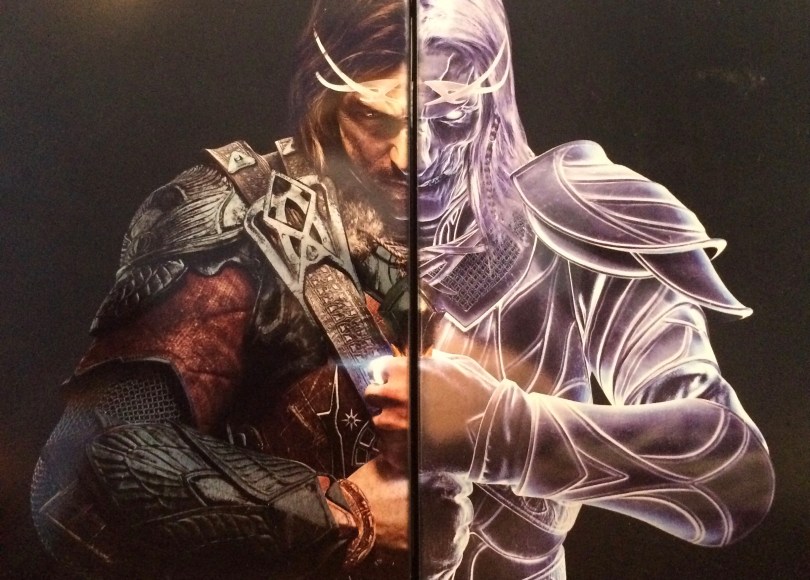
The basic story is that after the events of the first game, Talion and Celebrimbor have forged their own Ring of Power. After losing it temporarily to Shelob, the duo use it to build an army of Uruk-Hai, orcs, and Olog-Hai, trolls, which they use to capture Sauron’s fortresses and control the different regions in the game. After defeating Sauron’s army, a rogue Uruk necromancer, a Balrog, and the Nazgul, Celebrimbor is finally able to get his revenge on Sauron, kind of. Shadow of Mordor’s final mission started off promising, but the final boss was just an anticlimactic quick time event. Shadow of War’s final mission more than makes up for its predecessor. Not only is there one epic battle, there’s three: Isildur, the Witch-King of Angmar, and finally Sauron himself. I personally enjoyed them all and I think that the final mission was great. I would delve more in-depth into the story, but that would take too long and it would give away all the twists and turns.
SPOILERS END
Shadow of Mordor was a moderately long game with 20 main story missions, 2 locations, and a lot of collectibles. In that sense, Shadow of War dwarfs its predecessor. Shadow of War consists of 5 main story questlines, each one varying in length with a different number of missions, spanning 3 Acts and 5 unique locations, consisting of the urban Minas Ithil/Morgul, the cavernous Cirith Ungol, the green and lush Nurnen, the icy Seregost, and the fiery Gorgoroth. The five main story questlines are Gondor missions, Shelob missions, Eltariel missions, Bruz missions, and Carnan missions. All of these questlines vary in length and each adds to the story in different ways. Each questline also rewards you with different abilities; for example, once you get towards the end of the Carnan questline, you unlock the ability to summon drakes as your mount.
Besides the main questlines, there are also the Shadows of the Past missions, where you play as Celebrimbor and live through some of the challenges that he had to face when he waged war Sauron. The scattered artifacts and ithildin return as well, but with a change or two. Now the artifacts are spread out more evenly across the different regions with each region having between nine and twelve. Ithildin is also more rewarding now with six per region, but once all six are collected, you can open a door in Celebrimbor’s barrow in that region and unlock a piece of the Bright Lord legendary set. A new collectible also appears: Shelob memories. These memories are scattered across the different regions and they tell the story of how Sauron betrayed Shelob.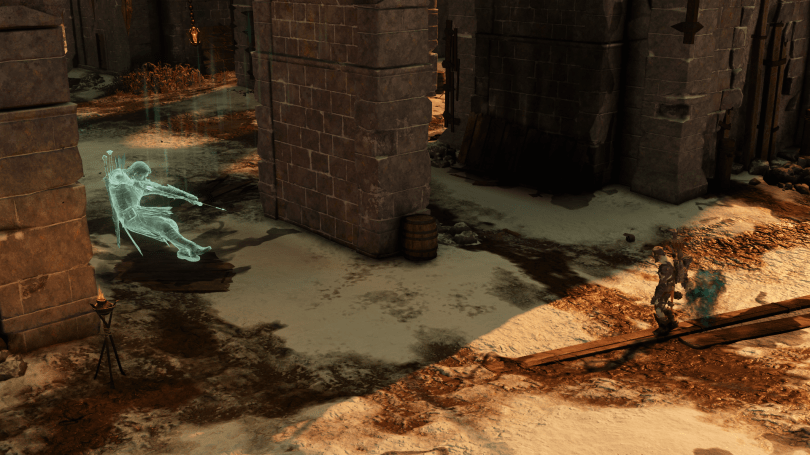
Act One of the story is fairly linear and consists of the Gondor and Shelob questlines in the regions of Minas Ithil and Cirith Ungol. Act Two starts off somewhat linearly, until you complete enough of the Bruz questline and conquer the fortress in Nurnen. After that, you regain access to Minas Morgul and Cirith Ungol, as well as new access to Gorgoroth and Seregost. Once all the regions are captured and you’ve progressed through almost all of the questlines, you can begin Act Three. Act Three is extremely short, consisting of only one final mission, but it is extremely eventful. Once you complete the final mission, you begin Act Four. Act Four, the Shadow Wars, is the final segment of Shadow of War, and once you complete it you get the real, final ending, though I personally haven’t gotten this far just yet.
Concerning the story, I enjoy a decently long game with a lot to do that’s fairly linear, but still provides enough choice that you can decide what you want to do and how you want to spend your time. Shadow of War fits this perfectly. I frequently find myself just screwing around with the Nemesis System, creating new enemies and making new friends. The Nemesis System allows you to forge deep and meaningful relationships with your Uruks and Ologs, whether it’s built on hate, fear, or respect. For example, I will never forget the tragedy of Rug the Tainted. Rug was one of the first Uruks that I ever branded. Once I conquered the fortress in Nurnen, I made him my overlord. Once I lost the fortress due to plot and betrayal, I made him my bodyguard because my previous bodyguard perished in an intense battle to reclaim my fortress. Rug served me well and I rewarded him accordingly. I always made sure that he was as strong as he could be, and he made sure that my resources didn’t go to waste. He helped me out during the first segment of the final mission and he was a good bodyguard, that is until he eventually betrayed. I tried to recruit him again and again, but every time I failed because of his iron will. Eventually, he was de-leveled all the way to level one. I tried to brand him, so I froze him and attacked him while frozen. Instead of weakening him, I killed him instantly. My friend was gone. He was gone the second he betrayed me. This is just one of the many amazing, and sometimes infuriating, things that the dynamic Nemesis System can do.
Something else I find infuriating is the leveling. Your level maxes out at 60, but by the end of the story, you should be around level 45. That means you need to gain 15 levels, eventually requiring over 100,000 experience points per level, while no longer having access to big missions with a lot of XP. You now need to rely on the randomly generated nemesis missions in the world. With the use of the two hour XP boosts, I usually find myself getting about one level an hour. It’s kind of an annoying grind, but it’s necessary if you want to unlock all 112ish skills in the game, upgrade all legendary gear to level 60, and have an army of level 60 Uruks and Ologs.
But other than that minor complaint, I love everything else about the game. The addition of tribes for Uruks and Ologs to belong to really adds to the depth and diversity of character generation. I love being able to configure different skills and legendary equipment to match a certain build, such as specializing in fire, ice, curse, etc. The addition of actual loot makes the game feel like more of an RPG and I really like that. Legendary sets, which consist of a sword, bow or hammer, dagger, chest piece, cloak, and ring rune, really add an incentive to hunt and kill strong enemies.
Another interesting change is the introduction of might. Now if you want to use a combat execution, combat brand, etc. you need to use your might. You obtain might by hitting enemies, parrying, and other means. My biggest complaint with this change is how Ologs relate to it. You can go into a battle with full might, waiting to use it on a captain, but a stray Olog hits you before you can dodge the attack. There goes all your might. This can be extremely annoying.
Something else I find annoying are the microtransacions, or more accurately, how everyone claims the microtransactions affect the game. First and foremost, you can obtain silver chests by just playing the game and spending the in-game currency mirian. If you want gold or mithril chests, you need to pay in gold, which is obtained either through paying real money or by playing the game and completing certain daily quests. These daily quests are usually simple things, like kill archers in Minas Morgul or execute Uruks in Seregost. But what really annoys me is how everyone seems to think that the inclusion of microtransactions completely ruins the game. They don’t. I’ve clocked in over 70 hours and I haven’t bought a single chest with real money. You can obtain literally everything by just playing the game. If you need a strong Uruk, send one out on missions or send him into the fight pits. If you need a stronger piece of equipment, kill a strong Uruk. The moral of the story: the microtransactions add absolutely nothing unfair to the game and they don’t make this game bad. I absolutely love this game and I find that it exceeded all of my expectations. Because of this, I find that this game is easily a 9.5/10.
 Broad Scope Entertainment