
 Posted by
 A lot goes into making a movie, but I for one tend to forget that. When watching a movie, I tend to focus on the plot and what’s happening, even though there’s so much more to the movie than just that. Sound design (including music), special effects, and costumes are just a few major aspects of a movie that are incredibly important, but can be easily overlooked. But after visiting the Detroit Institute of Art and its “Star Wars And The Power of Costume” exhibit, I now see just how crazy and important costume design can be.
Costumes can share a lot of information with the viewer. For example, darker colors are frequently associated with evil and Darth Vader’s suit is black; Darth Maul’s robes are black. On the other hand, the Jedi robes are brown and designed to look like a monk’s robe, thereby showing that the Jedi are the good guys. This information portrayed by the costumes may be incredibly basic, but that’s exactly what George Lucas wanted to communicate to his audience.

If Lucas wanted to show that a character was royalty, that character’s costume didn’t just look pretty or they didn’t just wear a crown. Instead, that character had hundreds of costumes, some of which would only be worn for half a scene, if even, but every costume was elegant and ornate, perfectly conveying the message that Lucas wanted to convey about this specific character. And in order to come up with and design these costumes, Lucas and his team looked to Asia, Africa, and Europe in order to blend different aspects of different cultures together to find the desired effect. Another example of this is the Empire. Lucas wanted to convey that the Empire was evil, totalitarian, and fascist, so the costumes incorporated aspects of Nazi uniforms.

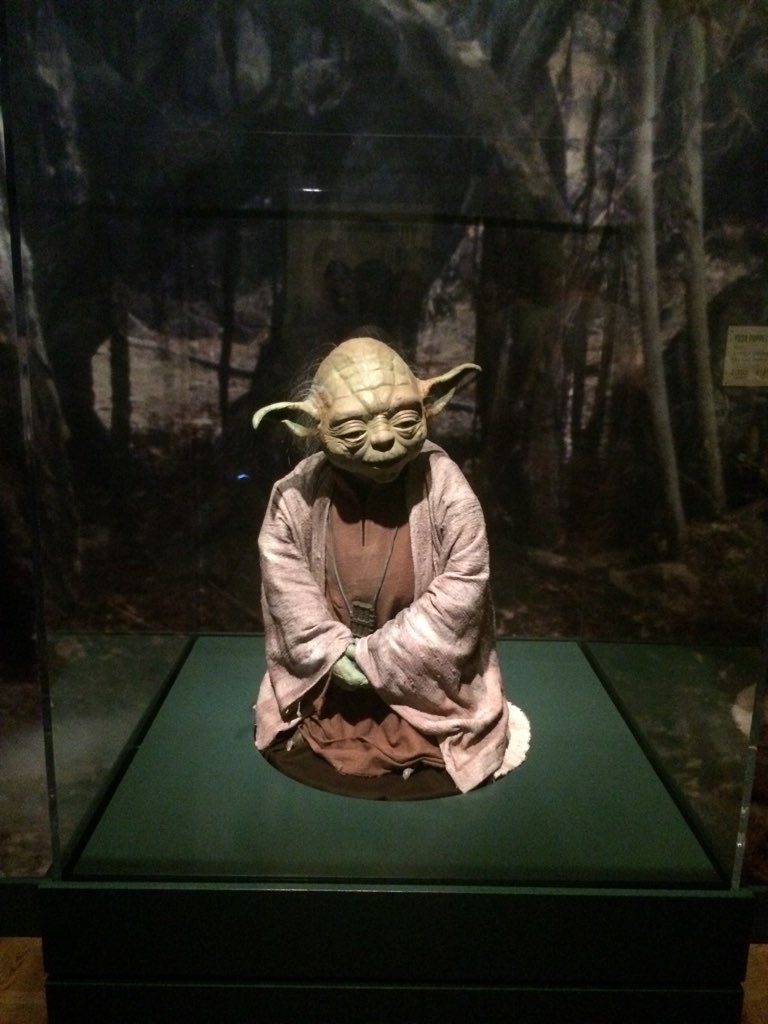
Looking back, these are all such minor details, but no costume was accidentally created. Every costume had at least one purpose, and they were all expertly put together to ensure that the effect or effect was achieved. When designing Yoda, for example, aspects of Albert Einstein were incorporated to make Yoda more familiar and trustworthy to the audience.
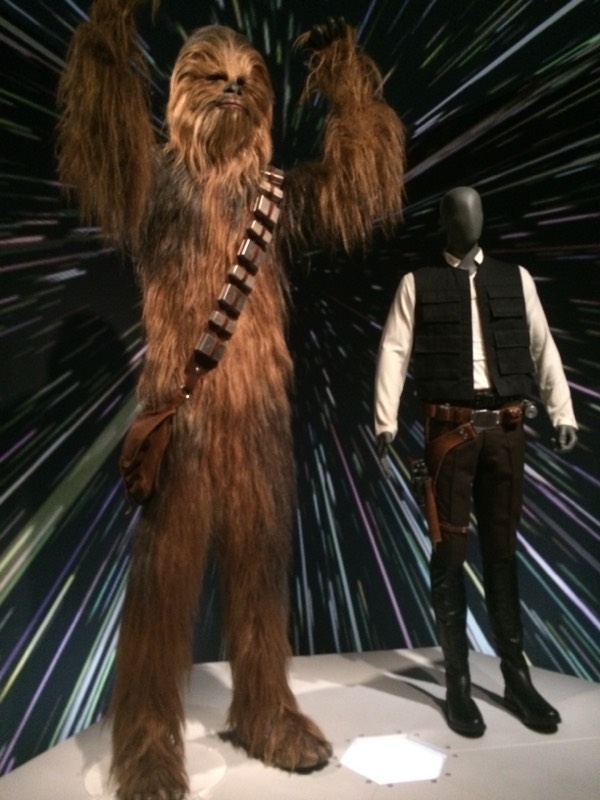
However, not every aspect of a costume is incorporated or used. Han Solo’s original design had a large neck-collar, but Harrison Ford refused, so that part of the costume was scrapped. But, the overall design stayed the same and Han Solo is an incredibly iconic character because of it.
One of the things that really stood out the most to me, even though it was never explicitly stated, was how unused character designs were later reused for a different character. The most notable instance of this being how the design for Boba Feet was originally made for Darth Vader, but it was rejected. Instead of completely scratching the costume design, it was then incorporated into a new character, and an incredibly famous one at that (that case was explicitly stated, but this next one wasn’t). But, one of the ones that stood out the most to me was an early design for Darth Maul. It wasn’t used for Darth Maul, but it was later used for the Nightsisters.

All in all, it was fascinating learning about just how much work went into designing and creating costumes alone (apparently The Phantom Menace had over one thousand costumes created), as well as what inspired these iconic costumes and what they were made to portray. If you live near Detroit or visit it on vacation, I would highly recommend going to check out this exhibit at the Detroit Institute of Art.
 Broad Scope Entertainment
👍
LikeLike