
 Posted by
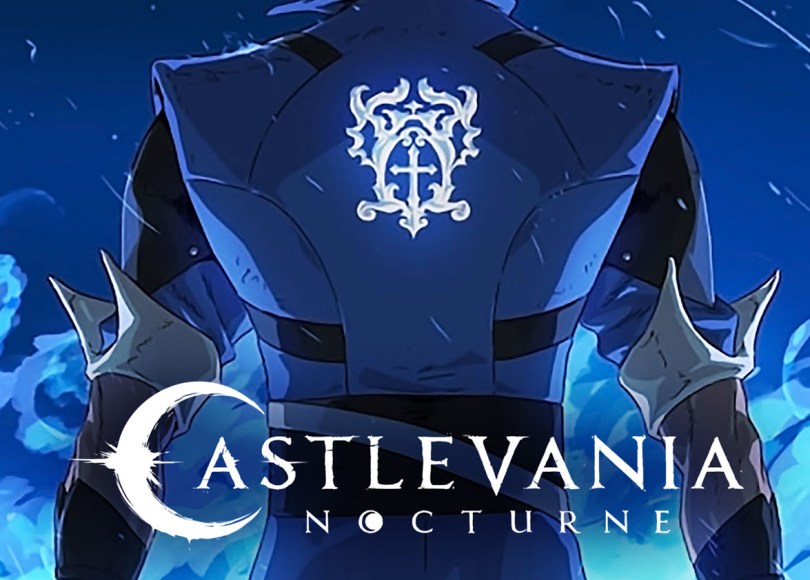
 With Halloween right around the corner, I figured that now would be the perfect time to watch and review the new Castlevania: Nocturne anime on Netflix. I enjoyed the original Castlevania, so I was very excited when I saw that Nocturne would be releasing. Overall, Nocturne is definitely a worthy successor, even if it stumbles from time to time.
SPOILERS FOLLOW
The story follows Richter Belmont as he opposes the self-proclaimed vampire messiah Erzsebet Báthory from ushering in an eternal night and new world order with the vampires free to rule as they please. The story is set in France during the time of the French Revolution, and 300 years after the events of the original Castlevania. I found the overarching story interesting enough, but its pacing was a bit slow at times. On the one hand, it’s understandable because the show has to introduce us to Richter and his supporting cast, which leads to the show using a large portion of an episode to show the character Annette’s backstory and how she escaped from slavery during the Haitian Revolution. On the other hand, lots of other details are left undeveloped for seemingly unknown reasons. For example, Erzsebet somehow has the blood of the Egyptian goddess Sekhmet in her, which grants her unbelievable power and allows her to literally blot out the sun. How she got said power is never once explained or even alluded to. The show is very interested in themes of freedom and oppression, and sometimes the show gets to be a bit repetitive, or ridiculous, in constantly expounding on these messages.
Turning to the characters, the cast is solid. Richter is compelling enough, but he lacks the charisma that Trevor Belmont had in the original series. Some of this could be due to how Richter is much younger and less experienced than Trevor, so while Trevor’s power ups were generally due to finding new weapons, Richter can actually grow and develop. We see some of this growth towards the end of the season when Richter finds himself capable of using magic again when his back is against the wall and he realizes that he has people in his life that he wants to protect. I found this scene to be really well done because Richter’s inability to use magic up until that point is present as a fact of his character, but not as a plot point. Richter’s encounter with his grandfather also explains everything in a very well done fashion. Richter’s grandfather explains that after a vampire killed his wife and best friend, he just couldn’t do magic anymore. This situation parallels the first scene of the show in which Richter watches the vampire Olrox kill his mother, in part because he intervened and used his own magic. The show respects the audience’s intelligence at grasping why Richter hasn’t been using magic, but now he’s overcome that past trauma and can use his magic again, and face Olrox. On the topic of Olrox, I would say that he or the Abbot are probably my favorite characters because they actually have some interesting nuance and complexity. Olrox is an extraordinarily powerful vampire, but he does not like Erzsebet. He bows to her because he recognizes how undeniably powerful she is, but he actively works against her by helping Richter. As for what motivates him, the likely answer is his love for the Abbot’s knight Mizrak, but this can only be inferred. I appreciate the nuances in his character and how Olrox is a villain, but he also does some good deeds. The Abbot is a similar character. He is a devout clergyman who has made sacrifices to become a forgemaster and create an army of night creatures for Erzsebet. He ultimately intends to betray her with said army, but his beliefs are still in conflict with his actions. He is also revealed to be the father of Maria, and I found the reveal to be well foreshadowed. I have a mixed opinion of Maria. Maria is a Speaker and primary companion of Richter, and she wholeheartedly supports the French Revolution to the point that it gets a little annoying. The Abbot makes his awful sacrifices because he fears the people like Maria who want to tear everything down and start over. I think my biggest problem is that Maria’s enthusiasm is never tempered. As someone who has studied history, the French Revolution was an incredibly problematic and destructive event in world history, so to see a character blindly supporting the French Revolution with no real voices of dissent opposing her really bothers me. While the Abbot is technically the main voice that opposes her, he’s still presented as an antagonist because he’s working with Erzsebet, albeit reluctantly. Oh and he goes off the deep end trying to sacrifice Maria while comparing himself with Abraham. I think it’s a very well done scene that fits his character, but he’s not a suitable ideological challenge to Maria. As a result, Maria comes off as a little preachy. The same can be said of Annette, though I think to a lesser extent because Annette’s driving motivation is that slavery is bad and the vampires need to be stopped before they enslave everyone. While this is somewhat of an oversimplification of her character and motivation, that’s still what she boils down to. She also uses magic and I think that overall, she’s a decent character who I’m relatively neutral towards, though she can get a bit repetitive. Tera is Maria’s mother and Richter’s “aunt,” and she’s a good character. She encountered Erzsebet back when she was in Russia, so she can provide necessary context for the other heroes. She also makes a heroic sacrifice at the end of the season so that the other heroes can escape Erzsebet. Finally, turning to Erzsebet and her main servant Drolta Tzuentes, they’re fine as antagonists. I don’t really have much to say about them. They’re somewhat similar to Carmilla and her faction in the original series, which I find fitting given that Elizabeth Báthory was the historical basis for Carmilla the vampire.
The two main features of the story that I liked the most were the foreshadowing and implied storytelling, and the overall ending of the season. As I mentioned above, I really liked how the show respected the audience’s intelligence and foreshadowed important reveals and developments, for the most part. I also appreciate that the villains win, and easily at that. The season repeatedly builds Erzsebet up as a serious force, and she delivers. Her success in blotting out the sun, coupled with how she easily shrugs off every attack thrown at her, make me really excited to see how the rest of Nocturne goes because she’s a main antagonist who’s easily on the same level as Dracula would have been in the original series, if not even stronger.
As for what I disliked, that boils down to the repetitiveness of some of the show’s themes as I detailed above, Erzsebet’s lack of backstory, and the very end of the final episode. Erzsebet’s lack of backstory bothers me because we have a main antagonist who’s incredibly strong, and there’s no explanation as to how she got that way. This wasn’t a problem with Dracula in Castlevania because not only is he Dracula, but the show explains that his castle is filled with everything he would need to reach that level of power. Nothing remotely similar is shown about Erzsebet; she just suddenly has Egyptian god blood somehow. However, my biggest complaint is how the season ends: Alucard arrives and saves Richter from Drolta. Alucard comes out of literally nowhere as a sudden Deus Ex Machina, and it feels really clunky. Where was he? Why did he take so long to show up? Why didn’t he stop Erzsebet earlier considering Richter literally asks if he’s the Alucard of legend? Maybe these questions will be answered next season, but the final reveal just left me feeling kind of annoyed.
SPOILERS END
Finally, I’d like to comment on the animation and music. The animation is just as smooth as the original series. Nocturne looks really good. The fight scenes are gorgeous, and also quite gory, so do keep that in mind; the series is rated TV MA for a reason. The cinematography, especially during these fights, is also fantastic. I found myself repeatedly surprised by some of these fights and just how complex some of the shots and blocking were. The music is also great. I don’t know a whole lot about music theory and composition, but I found the soundtrack to be excellent and very well done.
Overall, I enjoyed Castlevania: Nocturne. I’m not sure if I would say that it’s better than the original, but only the first season is out. I’m very excited to see where the series goes, and I don’t think that it will disappoint. It looks likes Nocturne will hopefully have a tighter and more streamlined narrative than the original did, and I only see that as a good thing. I would definitely recommend giving Nocturne a watch, even if you haven’t seen the original. While the context of the original may be helpful, Nocturne is disconnected enough that you can enjoy it all on its own.
 Broad Scope Entertainment