
 Posted by
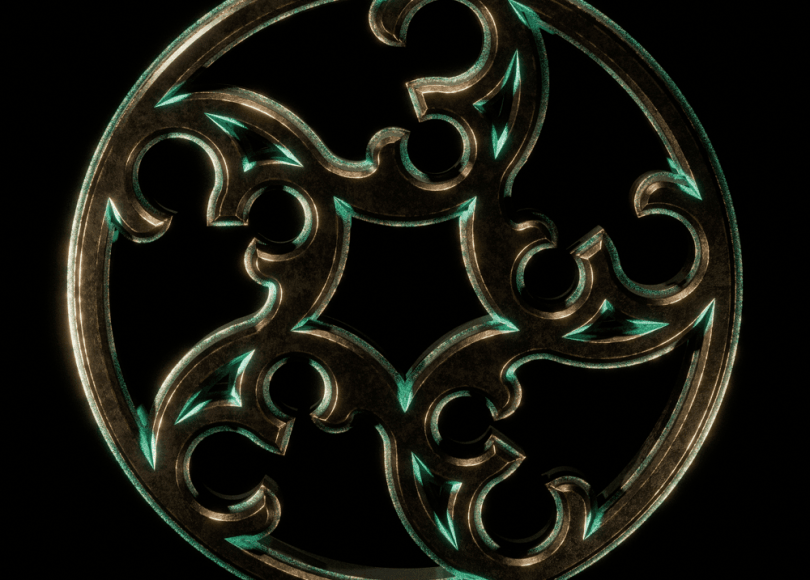
 Last month, the Swedish metalcore band Imminence released their newest album. I first discovered Imminence when Spotify’s autoplay introduced me to “Heaven in Hiding.” I really liked the song and how it mixed heavy metal music with classical strings and emotional vocals. Imminence quickly became one of my favorite artists, even earning the spot as my most listened to artist of 2023. Now after a few months of waiting, Imminence’s newest album The Black is finally out.
“Come Hell or High Water” is my favorite song on the album. It was released as a single almost a year ago, and it was the first of the singles released. It was always my favorite because the song primarily features clean vocals, though there is some intense screaming. The chorus in particular is very catchy, in my opinion because of its repetition and emotion. While fairly simple lyrically, I don’t think that’s a bad thing. The lyrics for many of Imminence’s songs are fairly simple and repetitive, which again is by no means a bad thing especially when some of the songs have very emotional messages, and “Come Hell or High Water” is one of their best in that regard.
“Desolation” was the next song released as a single, and it’s pretty heavy in the verses. The chorus returns to clean vocals, and it sounds really good. “Desolation” also prominently features the use of strings, especially during the chorus, and it sounds fantastic. The strings are often in the background and provide a nice juxtaposition to the harsh vocals. Overall, “Desolation” is a strong song that does a good job of encapsulating Imminence’s typical blending of harsh vocals, clean vocals, heavy music, classical strings, and a meaningful message.
“Heaven Shall Burn” was the third single released before the album’s full release, and it was always a bit of an outlier to me because of how heavy it is. The verses are just as heavy as “Desolation” and the chorus doesn’t let up. While the chorus is less harsh than the verses, I’d still describe the chorus as fairly harsh and heavy. The classical strings reappear prominently during the chorus of “Heaven Shall Burn” and they provide a unique blending and complement to the rest of the song that elevates it above typical metal songs, and Imminence above typical bands in my opinion.
“Beyond the Pale” is the first new song on the album that wasn’t released ahead of time as a single. I don’t really have a lot to say about this song. It’s fairly similar in construction and execution to songs like “Desolation.” The overarching message of the song is fairly interesting, but the heavy use of harsh vocals will likely cause it to be lost on the unaccustomed ear, and even the accustomed ear to an extent. It’s not a bad song, but I also wouldn’t classify it as one of the most noteworthy ones on the album.
“Death by a Thousand Cuts” was the fourth song released ahead of time as a single. The lyrics themselves are very anthemic and emotional. It’s a nice change from the previous songs in that this one is primarily clean vocals with the chorus getting intense at times, but arguably not harsh. At least, until the breakdown when the heaviness of the music and vocals both explode before quieting down again. The song has some very nice movement where it builds up and explodes in intensity. “Death by a Thousand Cuts” is another song where I’d say Imminence is at their best on the album.
“Come What May” is another new song first released with the album as a whole. The verses might be the heaviest and harshest on the album. This intensity is maintained as the verses just explode with emotion and passion. The entire album is a contemplation on death and darkness, often referencing or referring to “the black.” This theme is very apparent in “Come What May.” The song is also one of the longest on the album, clocking in at over 6 minutes. Despite its heavy opening, it features the most beautiful bridge out of any of the songs on the album where the violin takes center stage. Even if the intensity of the first half of the song may seem a bit much, the beauty and emotion conveyed in the bridge without a single line sung is worth listening to. The bridge ultimately crescendoes in one last lyrical outburst before fading out completely. “Come What May” is very interesting thematically in how the lyrics and music work perfectly in tandem to convey the central themes of the album.
“Cul-de-sac” is the next song, and the album is also it’s first appearance. “Cul-de-sac” is a wholly acoustic song, which makes it a perfect follow-up to “Come What May” and its long instrumental bridge. I can’t really describe “Cul-de-sac” because of how unique it is in comparison with the rest of the album. It marks the beginning of the second half and features some interesting dissonance.
“The Call of the Void,” another new song, follows and seems to change the theme of the album a bit. The lyrics are fairly harsh across both the verses and chorus, but it’s the lyrics themselves that are the most interesting as the song is one of rejection against death and a call to “rage agains the dying of the light.” Most of the songs up to this point have been more about acceptance, and while the bridge features a return to this acceptance, the subsequent breakdown rejects it. Overall, “The Call of the Void” is definitely a song where the substance of the lyrics is more interesting than the form.
“Continuum” was the fifth single released before the album. I was always so-so on it because of its incredibly heavy verses. Listening to it again, I find myself surprised by the chorus. “Continuum” features the most intense dichotomy between the heavy harshness of the verses and the clean softness of the choruses. The dichotomy works surprisingly well and creates a beautiful ebb and flow between sections of the song. The result is something dripping with emotion and a raw intensity unlike anything else on the album, even if it shares similarities in structure with many of the other songs.
“L’appel du Vide” is another instrumental song with no lyrics. It’s very placid and simple, which makes it a suitable fit to follow “Continuum.” However, halfway through the song it starts to distort and become almost ethereal. It’s a very interesting, and cool, effect. The song name also translates to “The Call of Emptiness,” and there’s definitely a calling effect during this distortion midway through the song.
“The Black” was the final single released, and it’s the title track. The track is beautiful, primarily featuring clean vocals. Musically, it continues much of what was present in “L’appel du Vide,” but “The Black” isn’t afraid to get heavy and harsh. “The Black” looks back to some of the details present in the lyrics of other songs in the album, and again while it can be harsh and heavy, the song is primarily clean and calm. It features some beautiful instrumental moments with the violin that really ties the heavy and calm together. The result is something that I really can’t describe. It features direct musical motifs from “Come What May,” and likely other songs though this was the most apparent one to me, in a breathtaking blend of heavy and clean. It almost seems like two songs at once.
The album concludes with “Le Noir,” another acoustic instrumental with no lyrics. Here again, the violin is on full display as it plays with the same musical motif from both “Come What May” and “The Black,” but this time there is no distortion and it seems almost more complete and perfected. This violin motif has a joy and fluidity that I found lacking in its previous iterations, and my interpretation is that the motif was incomplete and imperfect until it passed through “the black.” The final result is something truly beautiful and breathtaking.
Overall, I really like The Black. When I first listened to it, I found myself a tad disappointed, but upon listening to it all again in one sitting while writing this review and really paying attention to everything, my opinion has changed. The Black is the kind of album where the songs build off of each other. I noted the explicit recurring violin motif because it was very apparent to me as I listened, and I assume that there are plenty of other motifs present in the album that I just didn’t pick up on. Even the similar structure of many songs and lyrical overlap contributes to this interconnectedness and central message or story of the album. My interpretation of the album is one reflecting on death and what comes after. Maybe that’s the point, maybe it isn’t. The beautiful part about media is how the creator of it may have a message, but the audience may see something else in it, and both messages are still real. If you’re a fan of rock or metal music, I’d highly recommend The Black, and Imminence as a whole. Even if this isn’t your kind of music, I’d still recommend it because of how beautiful the album can be at times.
 Broad Scope Entertainment